How Should We
Engage with the Quran in Ramadan?
Dr. Fadl Murad, Professor of
Jurisprudence and Contemporary Issues at the College of Sharia at the
University of Qatar, presented a reflective reading of the short surahs,
emphasizing that they encapsulate the fundamental principles of faith, ethics,
and legislation, and establish a comprehensive Quranic framework for building
the individual and society.
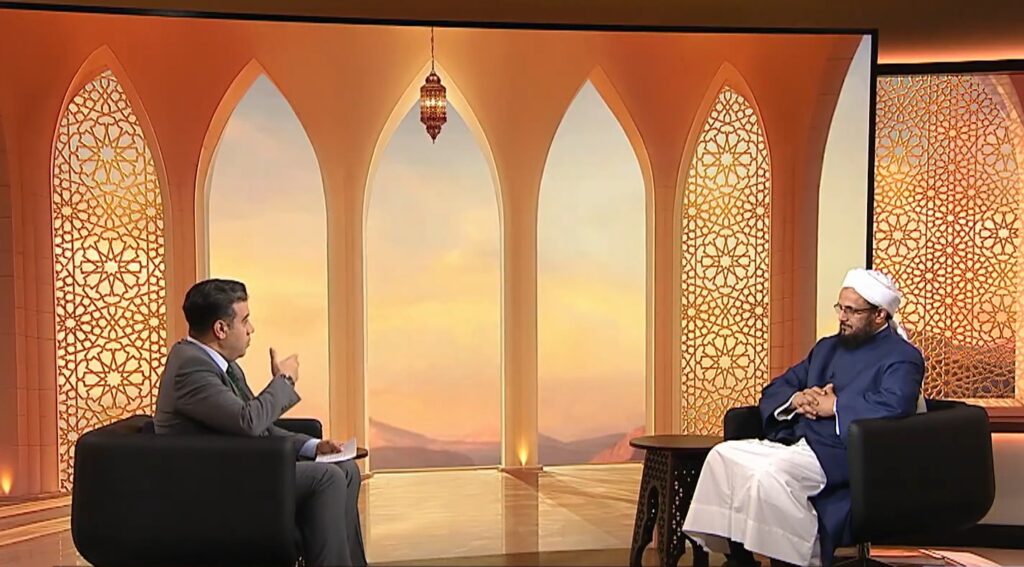
During his appearance on the
program “Days of God” on Al Jazeera Mubasher, Murad took viewers on a
contemplative journey into the world of the short surahs, revealing their
doctrinal, legislative, and educational dimensions. He stressed that they
represent major summaries of Islamic law and are not merely brief chapters
meant for easy memorization and recitation.
He pointed to a significant
Quranic observation: half of the Quran’s surahs are located in the last three
sections, from Surah “Qad Sami’a” to Surah “An-Nas.” He explained that this
distribution is not arbitrary but carries a clear legislative and methodological
significance, as these sections encompass the core principles of Islamic
law—ranging from financial and social regulations to family relations,
alongside the reinforcement of faith, ethics, and the human connection to the
hereafter.
Murad clarified that the section
of “Tabarak” focuses on matters of faith and ethics, while the section of
“Amma” intensively addresses themes of the afterlife, with nearly every surah
containing references to accountability, resurrection, and recompense. This, he
noted, makes these surahs an enduring argument and proof for all people,
regardless of their level of knowledge.
The Section of
“Amma” as a Universal Proof
Murad cited recommendations from
scholars and preachers, including Ahmad Yassin, who encouraged teaching
children the section of “Amma” due to its comprehensive values in faith,
ethics, and social solidarity. He affirmed that those who regularly recite these
surahs cannot claim ignorance of the essence of the message.
Regarding the relationship with
the Quran during Ramadan, he stressed that engagement with it should involve
multiple dimensions: recitation, study, prayer, and reflection. He explained
that recitation itself is a profound act of worship, and increasing it during
Ramadan aligns with the practice of the early generations of Muslims.
He also cautioned against the
misconception that prioritizing the quantity of Quranic completions over
reflection diminishes the Quran’s purpose. He emphasized that reflection has
varying levels—ordinary believers are not required to engage in scholarly or
jurisprudential analysis but should focus on contemplating the spiritual
meanings that revive the heart and refine behavior.
(Source: Al Jazeera Mubasher)
ـــــــــــــــــــــــــــ
* للاطلاع على الترجمة الكاملة للخبر باللغة
العربية، اضغط (هنا).