Serious Hepatitis C Outbreak Among Rohingya Refugees Sparks
Health Crisis Fears in Bangladesh
A senior
health official in Bangladesh has warned of a widespread outbreak of Hepatitis
C among Rohingya refugees in the Cox’s Bazar camps, revealing that one in five
adults has tested positive for active infection.
In
remarks to The Daily Star, Dr. Sarwar Jahan, the medical coordinator at the
Office of the Refugee Relief and Repatriation Commissioner, stated that
approximately 100,000 adult refugees are currently infected—a situation he
described as “extremely serious” and posing a threat of transmission to local
populations.
According
to the newspaper, over 70% of the nearly half a million adult refugees in the
camps have been tested, with results showing that 30% carry the virus and 20%
have active infections.
In
response to these alarming figures, a treatment program targeting 100,000 cases
is underway, with plans to treat 50,000 individuals by 2026.
Medical
data also revealed that 2.3% of the local population in the Ukhiya and Teknaf
areas are infected, compared to the national average of 1.1%, further
heightening concerns about the virus spreading beyond the camps.
Dr.
Jahan emphasized the need to raise awareness about safe medical practices,
including blood screening and avoiding the reuse of syringes and razors.
The
report also highlighted personal stories of suffering, including that of a
refugee named Hasina, who fled with her family to Bangladesh ten months ago.
She discovered her infection during childbirth in Myanmar in 2020, likely due
to unsafe medical procedures such as untested blood transfusions or
contaminated injections. Recent tests confirmed that she and two of her
children are infected.
Another
refugee, Shamsul Islam, expressed deep concern about his children contracting
the disease, which both he and his wife are battling, amid the growing outbreak
within the camps.
Data
shows that Médecins Sans Frontières (Doctors Without Borders) screened 30,000
adults in the camps between 2020 and 2024, diagnosing 17,000 with the disease.
Over 10,000 of them successfully completed treatment with a 95% success rate.
The organization plans to treat an additional 30,000 patients next year across
three hospitals serving nine camps.
In a
related development, the International Organization for Migration (IOM)
reported a significant outbreak of Hepatitis A among refugees in the early
months of this year, compounding the already severe health challenges in the
camps.
More
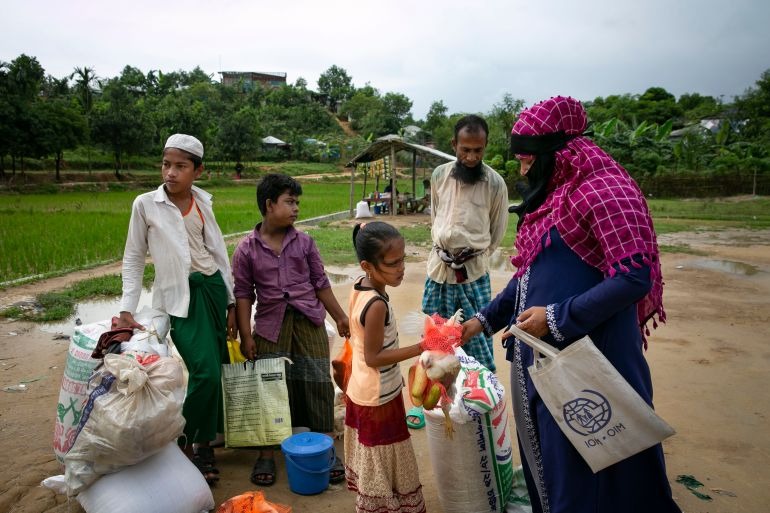
than one million Rohingya refugees reside in the Cox’s Bazar camps, which the
United Nations considers the world’s largest refugee settlement. These refugees
fled Myanmar amid a genocidal campaign launched by the Myanmar military in
2017, with displacement continuing due to ongoing fighting between government
forces and the Arakan Army. Reports continue to emerge of sieges, killings,
property destruction, and forced recruitment affecting the Rohingya population
on both sides of the conflict.
(Source:
Arakan Agency)
ـــــــــــــــــــــــــــــــــــــــــــــــــ
* للاطلاع
على الترجمة الكاملة للخبر باللغة العربية، اضغط (هنا).