Educational Vision
by Dr. Omar Abdul Kafi: Youth as the Energy of the Future Between Inclusion and
Exemplary Conduct
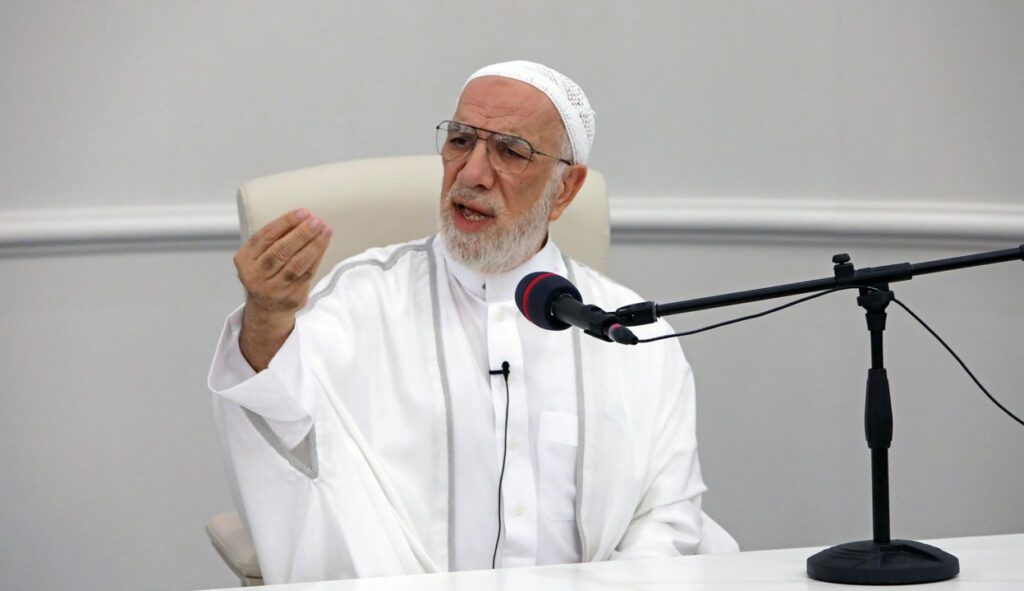
Islamic preacher and member of
the International Union of Muslim Scholars, Dr. Omar Abdul Kafi, presented an
in-depth educational vision regarding the reality of youth and the challenges
of the modern era, stressing that widespread negative perceptions of young
people neither reflect their true nature nor do justice to their capabilities.
In light of the changes brought
about by social media and the internet, he called for engaging with youth
through a spirit of inclusion and intellectual partnership, rather than through
rigid directives or constant criticism that may lead to alienation.
Youth as the
Energy of the Future
Dr. Abdul Kafi noted that many
young people possess extensive knowledge and advanced intellectual abilities,
along with a deep cognitive and spiritual conviction in Islam. Therefore,
diminishing their value or treating them with a mindset that dismisses their
intellectual capacities does not yield positive results and may instead produce
counterproductive effects.
What is needed, he explained, is
to build friendships with them, benefit from their abilities, and regard them
as partners in shaping the future. They possess the cognitive and analytical
tools that enable them to contribute effectively to their societies.
Dialogue Instead
of Domination
He stressed that excessive
direct advice can become a psychological burden and that continuous criticism
often generates feelings of rejection. Young people require dialogue based on
mutual respect rather than instructions imposed without discussion.
He also urged parents and
educators to elevate the intellectual quality of discussions, given that
today’s youth possess extensive knowledge and advanced analytical
skills—necessitating intellectual partnership to help them channel their
energies in the right direction.
Religion as
Conduct and the Fruits of Worship
In another aspect, he pointed
out that Islam is not merely a set of rituals but a comprehensive way of life.
Although acts of worship are of great significance, their true impact is
reflected in behavior—honesty, justice, and compassion. Faith is not measured
by the abundance of rituals but by their influence on interpersonal conduct and
the transformation of religious values into daily practices that embody the
spirit of Islam.
Love of the
Prophet Through Imitation
Dr. Abdul Kafi posed a
reflective question: If the Prophet Muhammad ﷺ
were to visit us, would he find in our behavior what pleases him? Loving the
Prophet is not merely a verbal claim but a practical commitment to his ethics
and guidance. The path to this is through emulating his life, cherishing the
Qur’an, and frequently recalling his virtues. Just as a person naturally speaks
of those they love, and a parent takes pride in their child’s achievements, a
believer expresses love for the Prophet through adherence to his moral example.
Inclusion Builds
the Future
He concluded by affirming that
the development of youth is achieved through inclusion rather than exclusion,
guidance rather than reproach, and dialogue rather than accusation. Societies
that embrace their younger generations and invest in their potential are those
capable of building a more stable and progressive future. Youth are not a
burden but a civilizational opportunity that must be harnessed for collective
advancement.
(Source: Qatar’s Al Sharq
Newspaper)
ـــــــــــــــــــــــــــ
* للاطلاع على الترجمة الكاملة للخبر باللغة
العربية، اضغط (هنا).